100 kW reference
₹23,000/kW
≈ ₹23 lakh ex-GST for a qualifying CAPEX rooftop
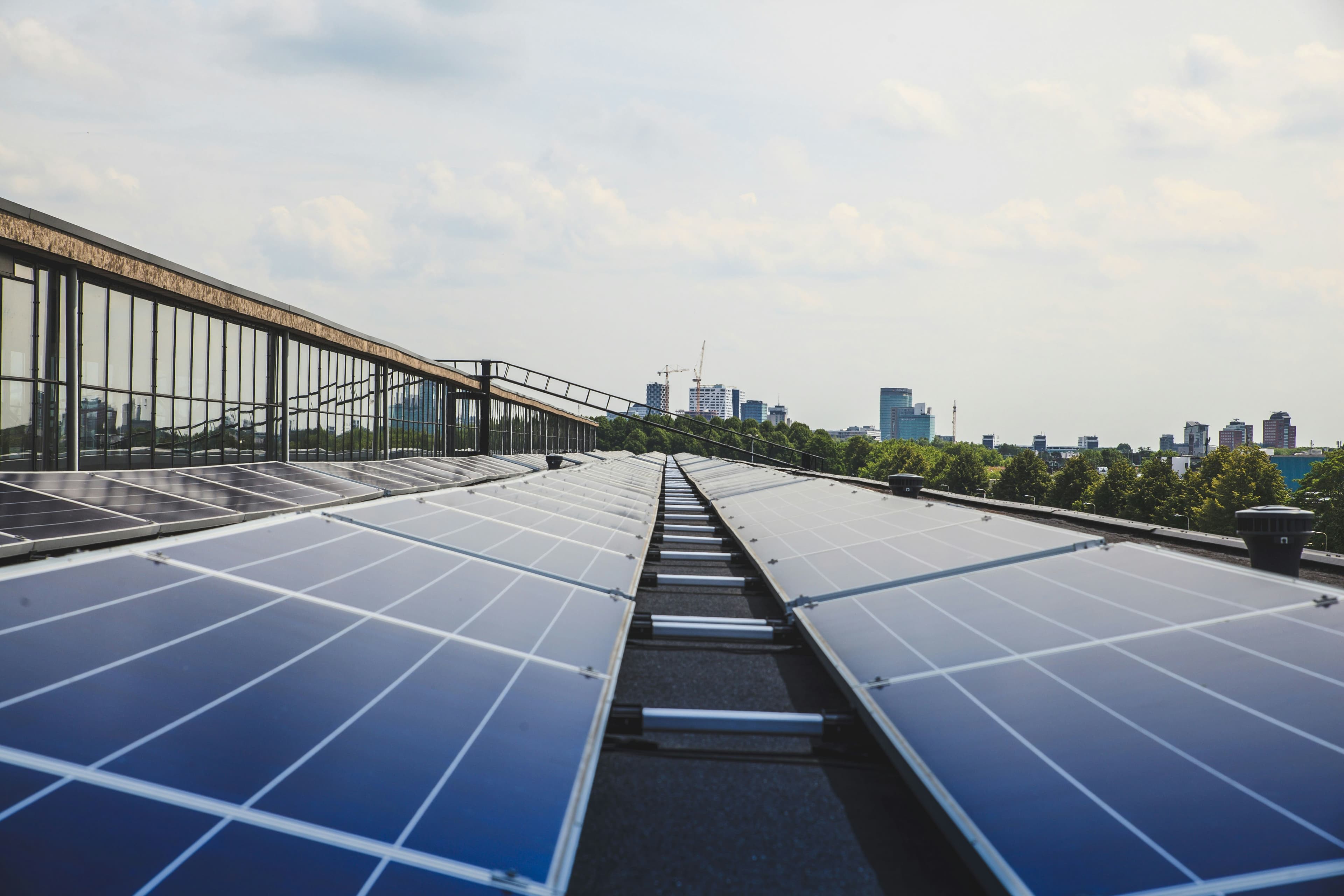
CAPEX rooftop solar for Ghaziabad's engineering, steel, electronics and pharma units across Sahibabad, Loni, Meerut Road and Bulandshahr Road. Ghaziabad is PVVNL territory under UPERC's net-billing rules.
100 kW reference
₹23,000/kW
≈ ₹23 lakh ex-GST for a qualifying CAPEX rooftop
500 kW reference
₹22,000/kW
≈ ₹1.1 crore ex-GST; scale lowers per-kW cost
Power distribution company
PVVNL
Paschimanchal Vidyut Vitran Nigam (Ghaziabad zones)
Industrial areas covered
7 areas
Site-IV, Sahibabad, Site-I, Bulandshahr Road, Site-III & Sector 22, Meerut Road
A 100 kW CAPEX rooftop system for a Ghaziabad factory costs about ₹23 lakh (₹23,000/kW) excluding GST with Sun Wave, and a 500 kW system about ₹1.1 crore (₹22,000/kW). Sizes in between are priced progressively, and the final quote follows a site survey of your roof, load and PVVNL connection.
Where we work
UPSIDA estate on the Delhi border with thousands of units.
UPSIDA Ghaziabad industrial area.
Two UPSIDA industrial areas along Meerut Road.
A new 10 MVA Naipura substation is planned to serve about 550 Loni units.
UPSIDA Ghaziabad industrial area.
UPSIDA area with metal and industrial-gas units.
Other UPSIDA areas under the Ghaziabad regional office.
Who we build for
Ghaziabad's One District One Product; machining runs in daylight shifts.
Energy-heavy processes, so savings scale with plant size.
Sensitive lines benefit from steadier on-site supply.
HVAC-heavy clean areas have high daytime consumption.
An ODOP focus for the district alongside engineering.
Grid rules
Under UPERC's rooftop solar regulations, net metering is limited to domestic, agricultural and institutional consumers. Industrial and commercial units use net billing: imports are billed at the full tariff and exports earn a separate feed-in rate. Plants can be 1 kWp to 2 MWp and up to 100% of contracted demand.
Source: UPERC RSPV Regulations 2019 (amended to Dec 2025)Since the Third Amendment (July 2025), the net-billing feed-in rate is the weighted average of the previous year's bid tariffs for solar projects of 5 MW and above, plus 25%. Because exports earn less than imports cost, the best economics come from using solar on site.
Source: UPERC RSPV Regulations 2019 (amended)HV-2 industry (75 kW and above) pays ₹7.10/kVAh up to 11 kV plus ₹300/kVA/month. PVVNL's summer schedule gives 15% off from 05:00–10:00 and adds 15% from 19:00–03:00; in winter, 17:00–23:00 costs 15% more and 23:00–05:00 15% less.
Source: UPERC tariff order 2 Jul 2026The UP Solar Energy Policy 2022 exempts electricity duty for ten years on solar power consumed captively, sold to the DISCOM or sold to third parties.
Source: UP Solar Energy Policy 2022, clause 13.6Consumers with 100 kW or more of contracted load can take green open access under UPERC's 2024 amendment, and smaller connections in the same division can join through a lead consumer. Captive users have no minimum.
Source: UPERC Open Access (1st Amendment) Regulations 2024Worked example
| Item | Value | Basis |
|---|---|---|
| System cost | ₹23,00,000 | 100 kW × ₹23,000/kW, ex-GST (Sun Wave reference) |
| Year-1 generation | 1,20,000 units | 100 kW × 1,200 kWh/kWp/year (Delhi Solar Policy, 2nd Amendment 2026) |
| Grid energy charge avoided | ₹7.10/kVAh | HV-2 industrial energy charge up to 11 kV, FY2026-27 (UPERC tariff order 2 Jul 2026) |
| Year-1 saving | ≈ ₹8,52,000 | 1,20,000 × ₹7.10 |
| Simple payback | ≈ 2.7 years | System cost ÷ year-1 saving |
Illustrative only. Assumes the factory uses all solar output during working hours and counts the energy charge alone, treating one kVAh as one kWh (unity power factor). It excludes GST, demand charges, surcharges, panel degradation, O&M and financing. Your actual payback depends on your tariff category, load profile and roof. Try the solar savings calculator with your own bill.
Local context
PVVNL's Ghaziabad Zone-III peak reached about 693 MW in May 2026 against a normal 517–550 MW, with average supply of about 23 hours 40 minutes a day.
Source: Hindustan Times, May 2026Industrialists have repeatedly raised power cuts at Udyog Bandhu meetings, and PVVNL plans to upgrade more than 400 transformers in Ghaziabad in 2026-27.
Source: Live Hindustan, 2026UPSIDA plans ring-main units in the Sahibabad industrial area to cut outages on overloaded feeders (Sept 2026).
Source: Amar Ujala, Sep 2026Ghaziabad is in the National Capital Region, so CAQM Direction No. 76 applies: diesel DG sets may run only as backup, and older sets of 41–800 kW need dual-fuel kits or certified emission-control retrofits. Rooftop solar cuts the daytime units a DG set or the grid has to supply.
Source: CAQM Direction No. 76 (as amended 2024)All of Ghaziabad district, including Sahibabad Site-IV, Loni, Meerut Road and Bulandshahr Road, is supplied by PVVNL, the UPPCL subsidiary based in Meerut. Rooftop solar applications go to PVVNL under UPERC's rules.
For PVVNL HV-2 consumers in FY2026-27, summer energy charges are 15% lower from 05:00 to 10:00 and 15% higher from 19:00 to 03:00. In winter they are 15% higher from 17:00 to 23:00 and 15% lower from 23:00 to 05:00, on a base of ₹7.10/kVAh up to 11 kV.
Not on its own. Under CAQM Direction 76, DG sets in the NCR may run only as backup with dual-fuel kits, emission-control devices or CPCB-IV+ compliance. Rooftop solar cuts daytime grid purchases, but backup during outages needs batteries or a compliant generator.
Sun Wave's reference price is ₹22,000/kW at 500 kW, about ₹1.1 crore excluding GST, and ₹23,000/kW at 100 kW. The final price follows a site survey, and industrial systems can be up to 2 MWp and no more than your contracted demand.
Two quick steps — most of it is just tapping. Our engineers come back within 24 hours with a custom design and savings estimate.
Whether you run a factory, warehouse, or commercial facility - we have the perfect solar solution. Our team will design a system tailored to your energy needs and budget.